

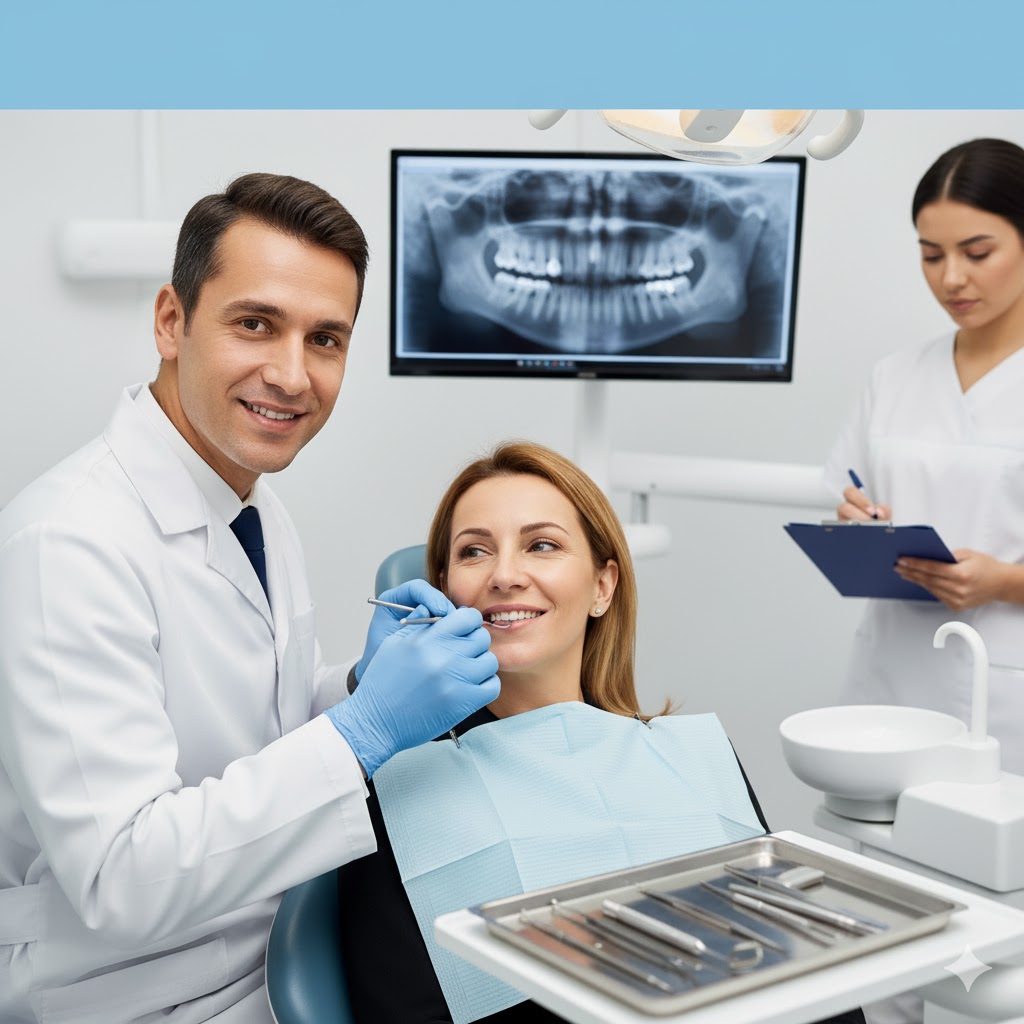
When properly applied and cared for, dental implants promise patients a lifelong, durable, aesthetically pleasing, and natural smile. However, the key to this longevity lies not only in surgical quality but also in the systematic follow-up and periodic check-up process that begins after the treatment is completed. Just like a natural tooth, an implant requires regular care and professional supervision. This supervision is the surest way to maximize implant life by preserving the health of the gums and bone surrounding the implant.
Avrupadent Hospital in Gaziemir, Izmir, views implant treatment not as a short process that ends with surgery, but as a long-term commitment that permanently improves the patient’s oral health. The periodic check-up protocols implemented at our clinic aim to ensure the early diagnosis of peri-implant conditions (peri-implant mucositis and peri-implantitis) and eliminate potential risks before they arise. In this comprehensive guide, we will examine in detail why the post-implant follow-up period is so vital, how this process is managed at Gaziemir Avrupadent Hospital, and the responsibilities of patients.
PHASE I: Early Checkups: Ensuring Healing and Osseointegration
The first few weeks after implant surgery are critical for the implant to fuse properly with the jawbone (osseointegration). Checkups performed during this period are essential to quickly resolve potential surgical complications and ensure the implant has established a stable foundation.
A. First Week Post-Surgery Checkup
The implant specialists at Gaziemir Avrupadent Hospital schedule the first follow-up appointment approximately 7 to 10 days after surgery. The main purposes of this appointment are as follows:
- Stitch Check and Removal: The condition of the stitches in the healing area is examined, and if non-dissolvable stitches were used, they are removed.
- Wound Healing Assessment: The surgical site is checked for infection, excessive bleeding, or excessive swelling. The physician ensures that the soft tissue surrounding the implant is healing properly.
- Patient Hygiene Education: During this phase, the patient is given detailed instruction on how to gently clean the surgical site without damaging it, including special brushing techniques and recommended mouthwashes.
B. Osseointegration Process Check (Months 3 and 6)
The integration of the implant with the bone is the most important biological step of the treatment. Before the prosthesis is placed on the implant, it is important to ensure complete fusion.
- Radiographic Follow-up: Specialized radiographs (usually panoramic or periapical x-rays) taken approximately 3 and 6 months after implantation show the bone level and density around the implant. Avrupadent Hospital specialists use these x-rays to check with millimeter precision for any signs of bone loss or infection around the implant. These checks determine whether the implant is ready for final loading (prosthesis placement).
PHASE II: Long-Term Follow-up: Preventing Peri-implant Disease (Peri-implantitis)
The greatest threat to the lifelong success of implants is Peri-implantitis, an inflammatory condition surrounding the implant. This condition, the equivalent of periodontal disease on natural teeth, can be completely prevented or treated very early with regular check-ups.
A. Why Regular Checkups Are Necessary: Peri-implantitis Risk
Implants do not have nerve endings like natural teeth; therefore, pain may not occur immediately when a problem begins. This makes it difficult for patients to detect the problem.
- Early Diagnosis is Vital: During regular checkups, the dentist measures the depth of the gum pockets around the implant using special instruments (probing). An increase in this measurement is an early sign of infection. At Gaziemir Avrupadent Hospital, X-rays and pocket depth measurements taken during routine checkups allow the detection of peri-implantitis before bone loss begins, in the peri-implant mucositis stage.
- Bone Protection: As peri-implantitis progresses, the bone supporting the implant begins to resorb. This progression can only be monitored with X-rays. Early intervention stops bone loss around the implant and allows it to be salvaged.
| Follow-up Interval | Follow-up Purpose | Procedures Performed | Risk Avoided |
| First 6 Months (Treatment (The End) | Osseointegration and prosthetic fitChecking the implant | Radiographic evaluation, occlusion adjustment | Fracture of the prosthesis due to incorrect forces |
| Annual Routine Checks (Every 6 Months) | Longevity and stability check | Probing (Pocket Depth Measurement), professional cleaning | Onset and progression of peri-implantitis |
| Every 3-5 Years | Implant integrity and bone level determination | Detailed radiographic documentation (Panoramic/CBCT) | Late-term bone loss and implant component fatigue |
B. The Role of Professional Implant Cleaning
The surface of implants is slightly different from that of natural teeth, and plaque accumulation can occur more rapidly in these areas. In addition to home care, professional implant cleaning should be performed periodically by expert hygienists at Avrupadent Hospital.
- Special Instruments: This cleaning is performed using special instruments (usually with plastic or titanium tips) that do not damage the implant surface. It should be noted that traditional dental cleaning instruments can scratch the implant surface.
- Six-Month Checkup Routine: Our clinic strongly recommends that patients schedule routine checkups and professional cleaning appointments every six months, depending on their risk. This system ensures that the implants will function smoothly for many years.
PHASE III: The Difference in the Follow-Up Process at Avrupadent Hospital Gaziemir
Located in Gaziemir, Izmir, Avrupadent Hospital implements a personalized care protocol that takes the post-implant follow-up process beyond just a routine check-up.
Personalized Follow-Up Factors:
- Bruxism (Teeth Grinding) Management: For patients with a teeth-clenching habit, a night splint is used to compensate for the excessive force exerted on the implants. This plate protects the implant’s superstructure and its connection to the bone.
- Risk Group Monitoring: Patients with systemic factors that increase the risk of peri-implantitis, such as diabetes or smoking, are invited for checkups at shorter intervals (e.g., every 3 months).
- Occlusal Adjustments: The occlusal balance of implant-supported dentures can change over time or due to wear on adjacent teeth. An incorrect bite can lead to implant overload and failure. This occlusion is precisely adjusted during periodic checkups.
Lifetime Implant
Dental implant treatment is an investment performed with high success rates at Gaziemir Avrupadent Hospital, radically improving quality of life. However, the return on this investment depends as much on the surgical success of the implant-placed dentist as on the patient’s post-treatment discipline and adherence to our clinic’s regular follow-up program.
At the Gaziemir location in Izmir, we provide all the professional support we can provide to ensure your implants remain healthy and functional for a lifetime, with our expert staff and advanced diagnostic equipment. To ensure the longevity of your implants, never neglect your regular checkups and professional maintenance appointments recommended by your dentist. Remember, early detection and treatment of peri-implantitis means a salvageable implant. Trust the expertise of Avrupadent Hospital Gaziemir to ensure your implant health.